


Bitcoin. Source: Adobe
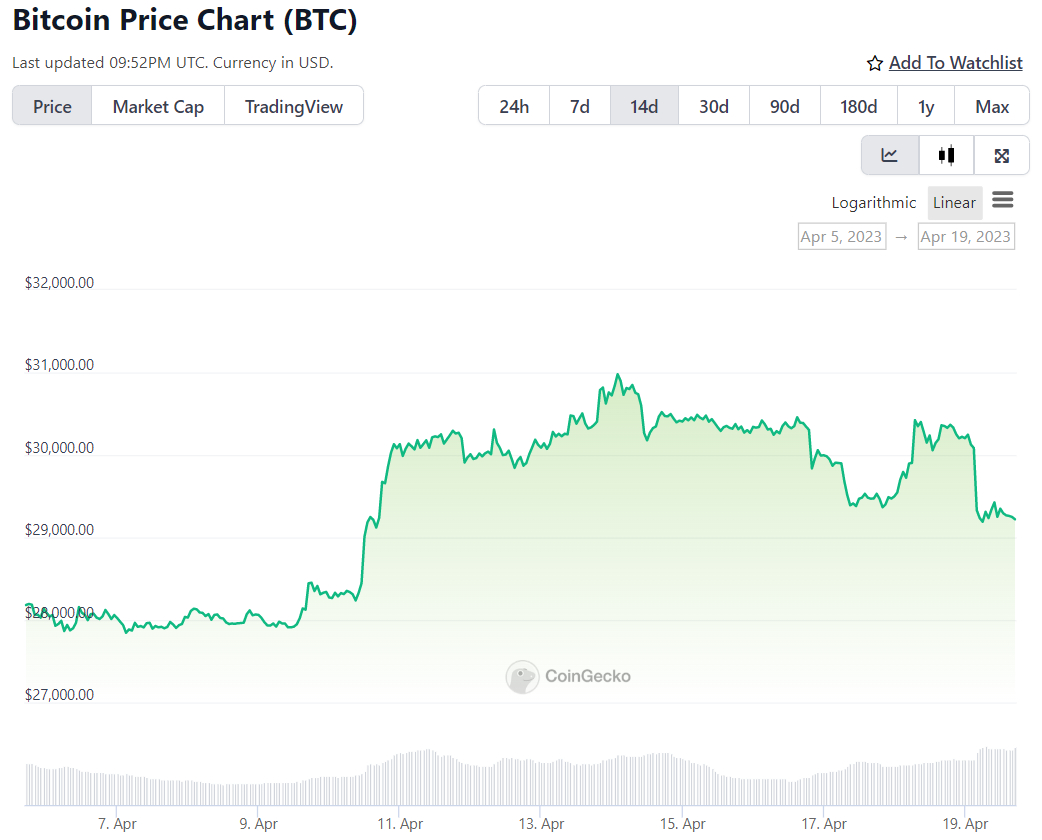
Bitcoin (BTC) fell sharply on Wednesday, with analysts citing a massive sell order on the world’s largest crypto exchange Binance and better-than-expected inflation data out of the UK as a drag on price action.
BTC/USD last changed hands near $29,000, posting losses of around 4.5% on the day, putting the cryptocurrency on course for its worst daily performance since March 9.
Despite this, liquidations of leveraged long positions in bitcoin futures remain relatively limited at just over $40 million, according to Coinglass.
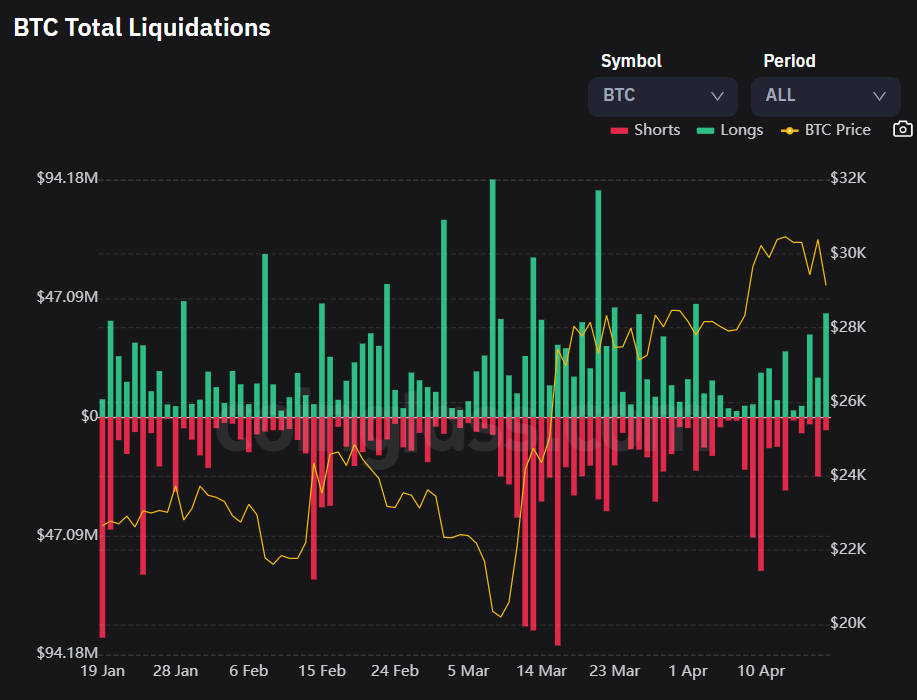
That’s not even the highest this month, suggesting that the recent move lower hasn’t triggered a major long print.
For now, Bitcoin is managing to hold above the key psychological level, as is its 21-day moving average just above it at $29,043.
Support in the form of the late March/early April highs in the $28,780-$29,380 range also appears to be holding a bottom below the price for now.
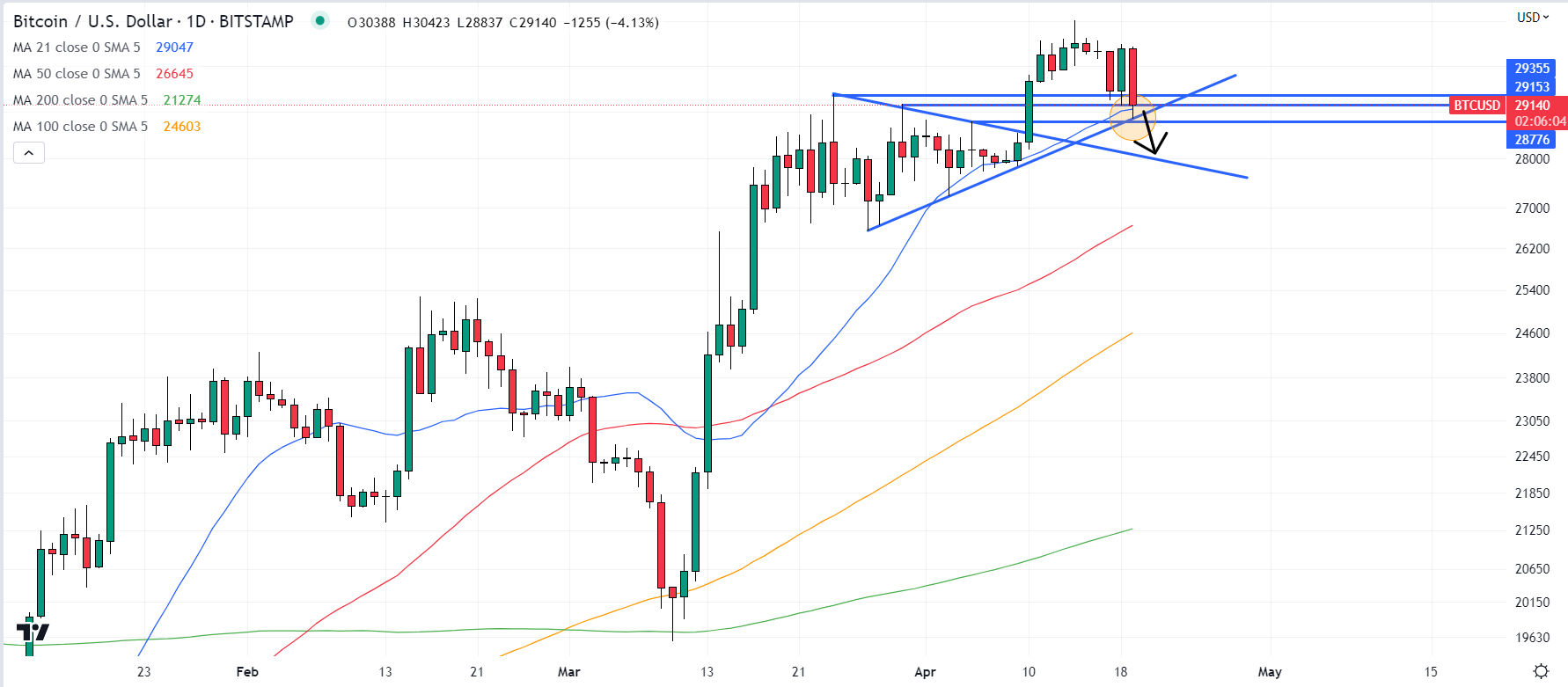
But a break below this key support cloud could open the door for a quick drop to the $28,000 level, where BTC would start a downtrend from the recent highs.
How low can the BTC price fall?
If this level were to go as well, it would open the door for a possible drop towards resistance and support into the $26,500 area, which is roughly where the 50DMA is also located.
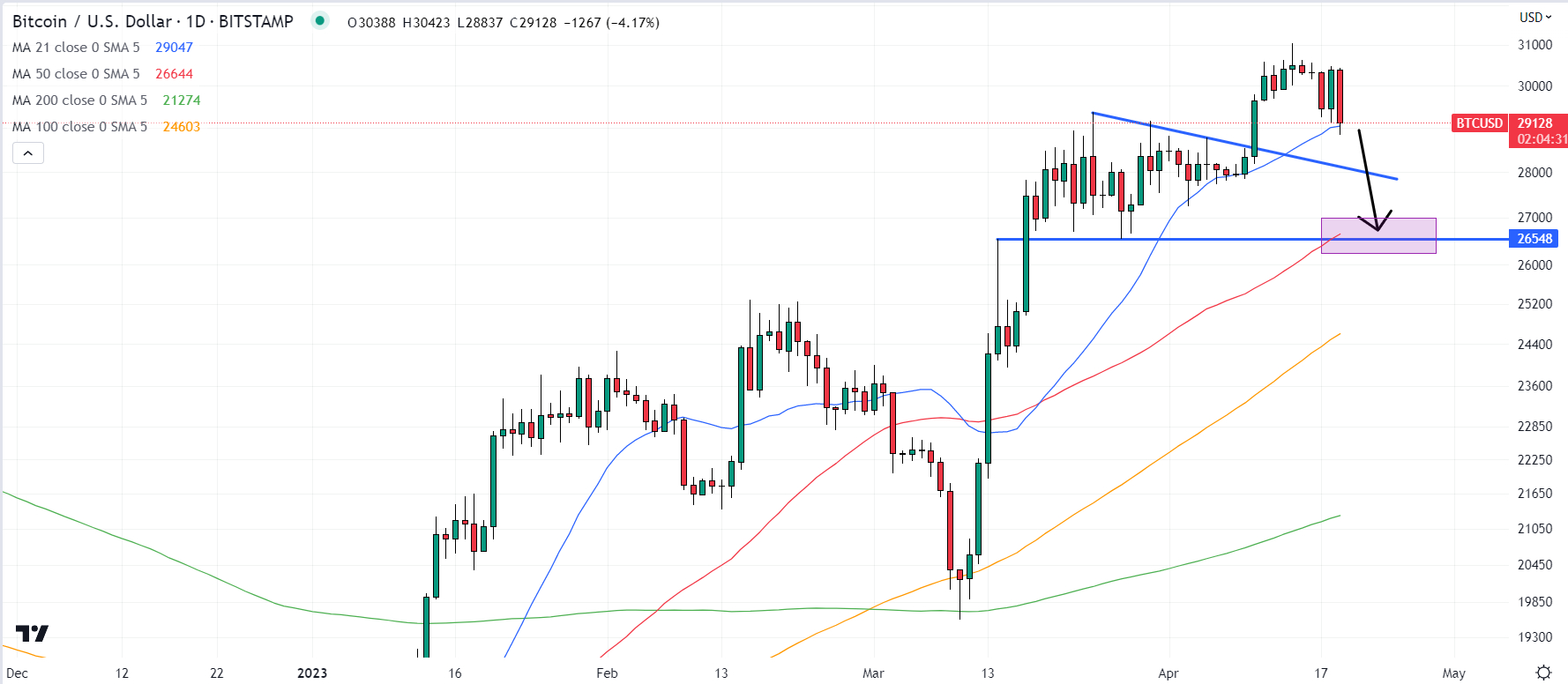
That would represent an 8% drop from current levels.
Below that is the next major support zone in the $25,200-400 region.
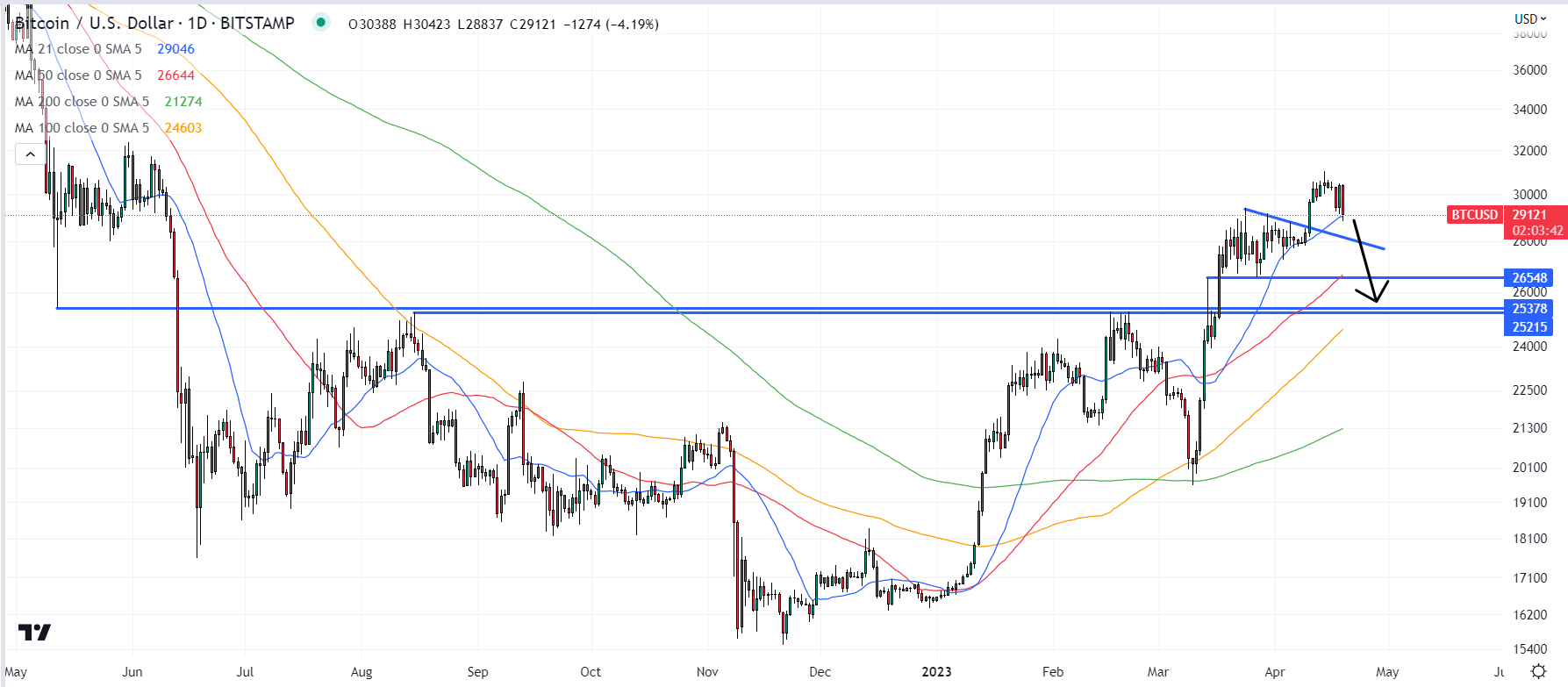
If Bitcoin dips back to the mid-$20,000s, it could present a tremendous opportunity for bulls to add to long positions or for those who missed March’s rally from lows below $20,000 to enter the market.
Because, despite the continued risk of short-term volatility and rapid 20% corrections (as seen from late February through March), Bitcoin has shown strong signs that it is in the early stages of a new bull market.
Widespread on-chain indicators are screaming for it, as discussed in these previous articles.
Analysis of Bitcoin’s longer-term market cycles also suggests that last year’s lows at $15,000 were the bottom of the last bear market, as discussed in this recent article.
Meanwhile, the macroeconomic backdrop for Bitcoin is likely to become far more favorable in 2023.
Yes, there could be another Fed rate hike or two, but risks seem to be skewed toward a rate-cutting cycle that begins later in the year as the Fed comes to terms with a (likely) imminent recession.
Options markets eased on downside volatility risks
For now, bitcoin options markets appear to remain bullish amid the risk of a significant further downtrend.
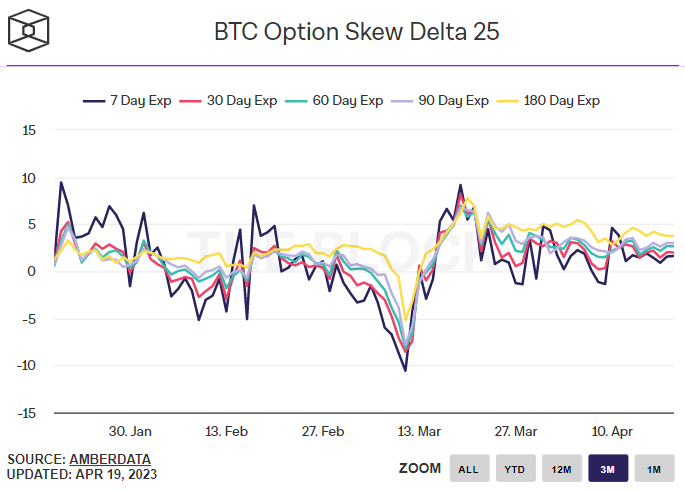
The 25% delta skew of bitcoin options expiring in 7, 30, 60, 90, and 180 days all remain above zero, suggesting that bitcoin options investors remain at a premium over bullish call options equivalent bearish put options, suggesting that expectations remain tilted further up rather than down.
Learn Crypto Trading, Yield Farms, Income strategies and more at CrytoAnswers
https://nov.link/cryptoanswers
Comments are closed.