


| Surname | Ethereum classic |
| ticker | ETC |
| total supply | 230,000,000 |
| category | Blockchain platform |
| starting price | $0.61 |
| Website URL | https://ethereumclassic.org/ |
Ethereum Classic firmly believes in a decentralized, censorship-resistant, permissionless blockchain that cannot be shut down and has irreversible smart contracts. As a result, she parted ways with Ethereum back in 2016. The coin has surged in value by 30% in the last month as it was announced that both Coinbase and Robinhood are adding it to their platform.
The battle between Ethereum and Ethereum Classic
Ethereum Classic split from Ethereum back in 2016 due to technical and philosophical differences. For the supporters of Ethereum Classic, the hard fork of Ethereum and the change in its code was the result of a hack that should never have happened. Finally, if the blockchain is to be immutable, the system should be resilient to these types of attacks. For Ethereum advocates, the transaction was valid and executed. Ethereum Classic, in its Declaration of Independence, refers to Ethereum’s violation of fungibility and immutability, the two main proponents that bring value to peer-to-peer cash and smart contract-based systems.
The core belief of Ethereum Classic is a decentralized, censorship-resistant, permissionless blockchain.
Here’s a more detailed version of what caused the rift between the two: It all started with the DAO. The DAO was an Ethereum project intended to act as a decentralized venture fund with the goal of funding future DApps made in the ecosystem. The DAO managed to raise $150 million in ether before the hack. A voting system was held to decide how the funds should be distributed via voting tokens. In 2016, the DAO was hacked and over $50 million of their funds were moved.
Although the fund withdrawal action performed was valid for the Ethereum community, the bulk of the Ethereum community decided to change the Ethereum code to return funds to the investors and away from the attacker.
A small but vocal minority of participants disagreed with the decision and continued to use the old version of the blockchain. This group strongly believed that the blockchain should be 100% censorship resistant and unmodifiable.
Long story short, Ethereum Classic is an alternate version of the blockchain where the funds from the DAO attack were never returned to the Ether owners. Ethereum is a blockchain that returned those funds to its users.
The Ethereum Classic development team
Unlike Ethereum, which has a very large development team, Ethereum Classic has a smaller group that is currently growing.
The Ethereum Classic development team, ETCDEV, works full-time on Ethereum Classic projects. These projects include:
- Classic Geth, a key client for the ETC blockchain that has contributed its own original projects such as the Emerald platform. Geth has been maintained since the DAO fork, with a focus on modularization, performance, and better suitability for a business environment. Up to 50% of the current code has been replaced, rewritten or removed.
- The Emerald platform is also helping others develop the Ethereum Classic blockchain. It is a software development kit (SDK) for building desktop, mobile, web, and shell scripting applications that run on the Ethereum ETC blockchain.
- SputnikVM is a next generation Ethereum Virtual Machine (EVM). It has a separate embeddable EVM compatible with other Ethereum-based blockchains and IoT.
- Sidechains are also implemented as a native part of the ETC infrastructure with protocols to add the scalability to bring ETC to the IoT.
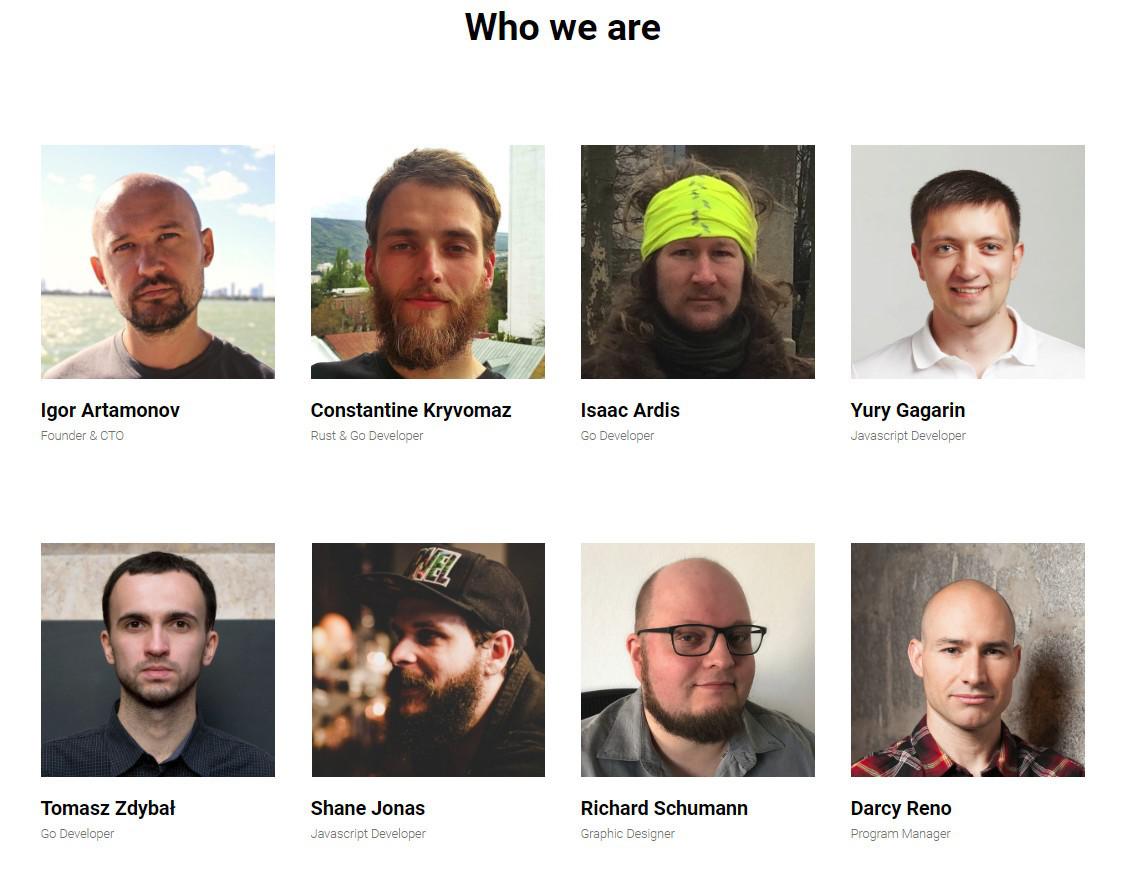
The Ethereum Classic team includes founder and CTO Igor Artamonov, who has been a professional software developer since 2001 and has been writing code since 1995. He has in-depth knowledge of data processing for the cloud, Ethereum and the blockchain. Igor is responsible for developing technology strategy, products and development goals. The team also includes a number of Go and Javascript developers.
Ethereum Classic partnerships
Ethereum Classic announced a partnership with Zeniex, a cryptocurrency exchange founded by a group of financial and security experts from South Korea and China. The aim of the partnership is to build up the Ethereum Classic Community in Asia.

Following the Ethereum Classic Cooperative’s announcement in July that it would use its $700,000 in excess cash to focus on Ethereum Classic’s reach and awareness over the next 6 months, Ethereum Classic plans to build more partnerships as soon as possible Ethereum Classic is compatible with the Ethereum blockchain. As more projects move to Ethereum Classic, this should result in more DApps being launched on it, increasing its value as a platform.
Coinbase and Robinhood add Ethereum Classic
Robinhood, a US-based financial services company in California valued at $1.3 billion in 2017, recently announced that users can now use Ethereum Classic in its cryptocurrency app. Users can now invest in Dogecoin, Bitcoin Cash, Litecoin, Bitcoin, Ethereum, and Ethereum Classic using the app.
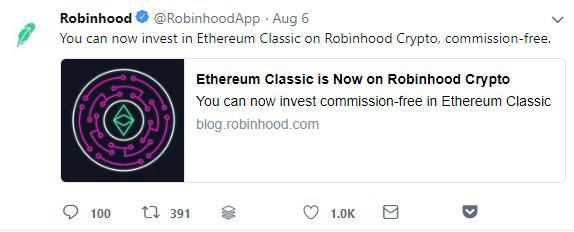
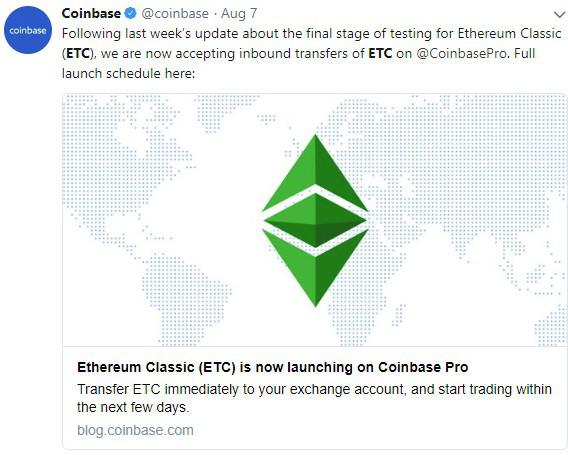
Almost simultaneously with the Robinhood announcement, Coinbase, a digital currency exchange, also announced the addition of ETC to its listing. Coinbase recently announced final listing tests for ETC in preparation for cryptocurrency support across its many services.
ETC Coin price history
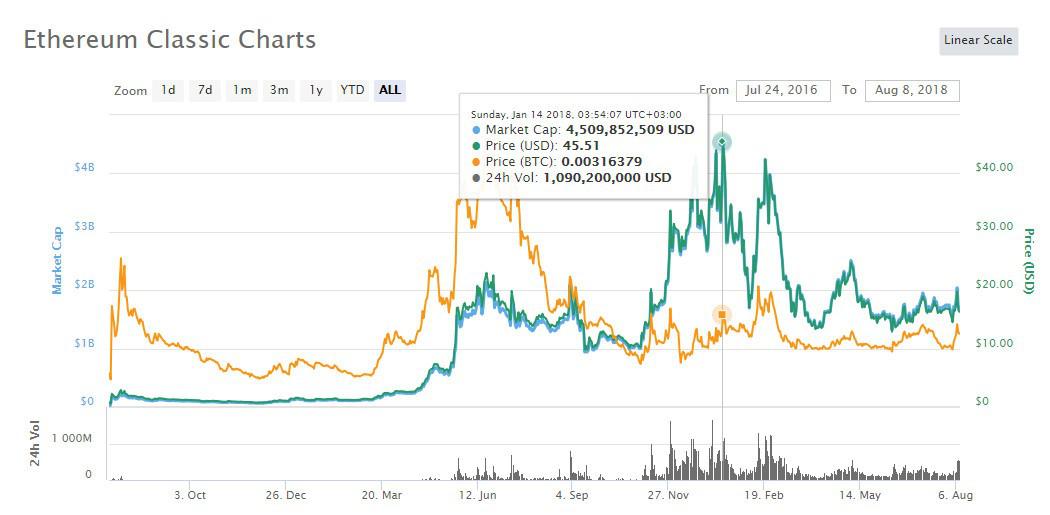
Ethereum Classic initially traded for $0.61 in July 2016. By January 2018, it rose to $45.51. Ethereum’s price is up 30% over the last month, mainly due to June’s announcement of Ethereum Classic’s listing on the Coinbase platform, as well as the announcement that users can now invest in Ethereum Classic on Robinhood Crypto.
To update: Coinbase has started accepting Ethereum Classic deposits on its cryptocurrency exchange and has increased the purchase limit to $25,000.
How gas works
Because Ethereum and Ethereum Classic share the same underlying blockchain and ecosystem, they are both powered by GAS. GAS is the execution fee that Ethereum senders pay for each operation performed on an Ethereum blockchain. It is bought for ether by the miners who run the code. Its purpose is to prevent spam on the network and allocate resources proportionally to requests.
The price of GAS is set by miners and is obtained by adding Ether to your account.
How to buy ETC
The main exchange for buying ETC is Binance, which currently has the largest volume of the currency at over $87 million. ETC can be traded against USDT, ETH, and BTC on Binance.
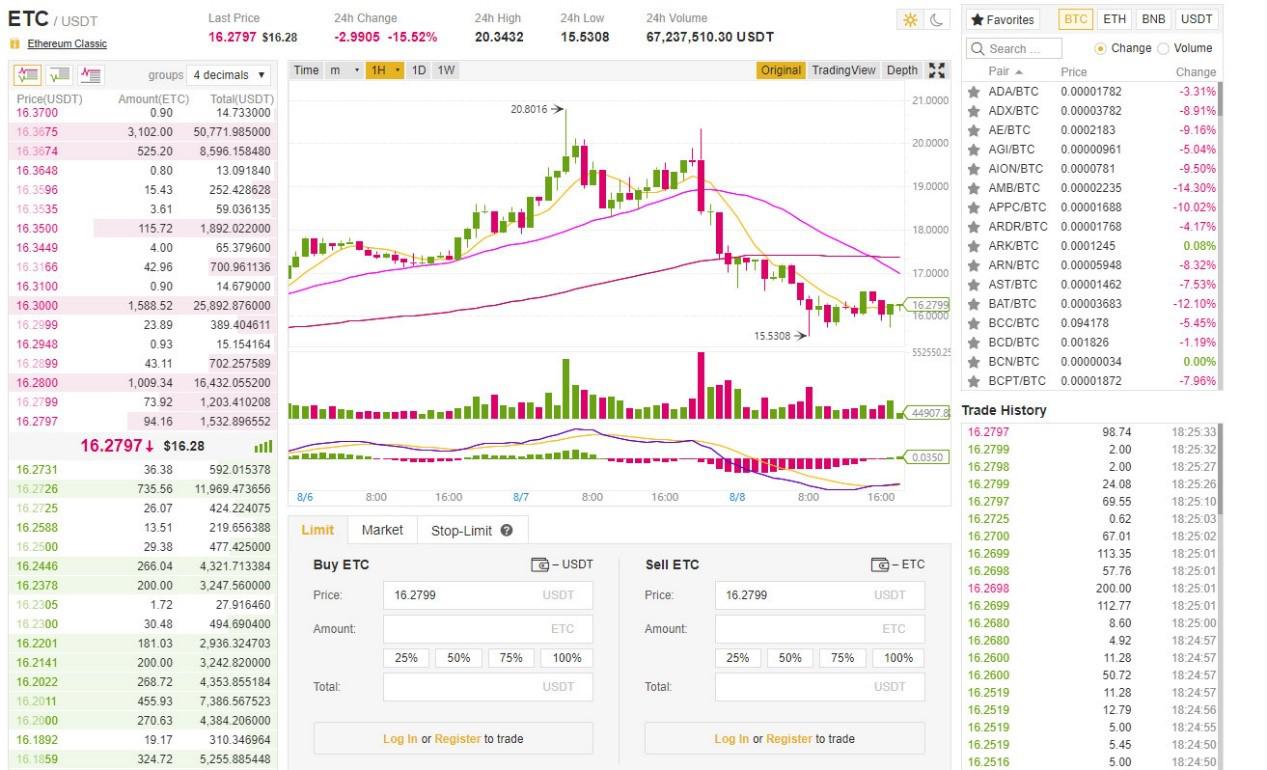
ETC is also available on the following exchanges:
How to mine ETC
Ethereum Classic is a minable coin. You can mine it from a number of mining pools. But first you need a GPU, 4+ GB RAM and an Ethereum Classic account and a GPI miner with at least 4 GB memory.
Nanopool is a pool where you can get started.
How to save ETC
Ethereum Classic can be stored in any wallet that supports ERC-20 tokens such as Coinomi, MetaMask and MyEtherWallet.
You can also store ETC on the Emerald wallet or the Classic Ether wallet, both of which are available for download on the Ethereum Classic website.
For maximum security, however, you should store your Ethereum Classic on hardware wallets such as the Ledger Nano S.
Timetable and future plans
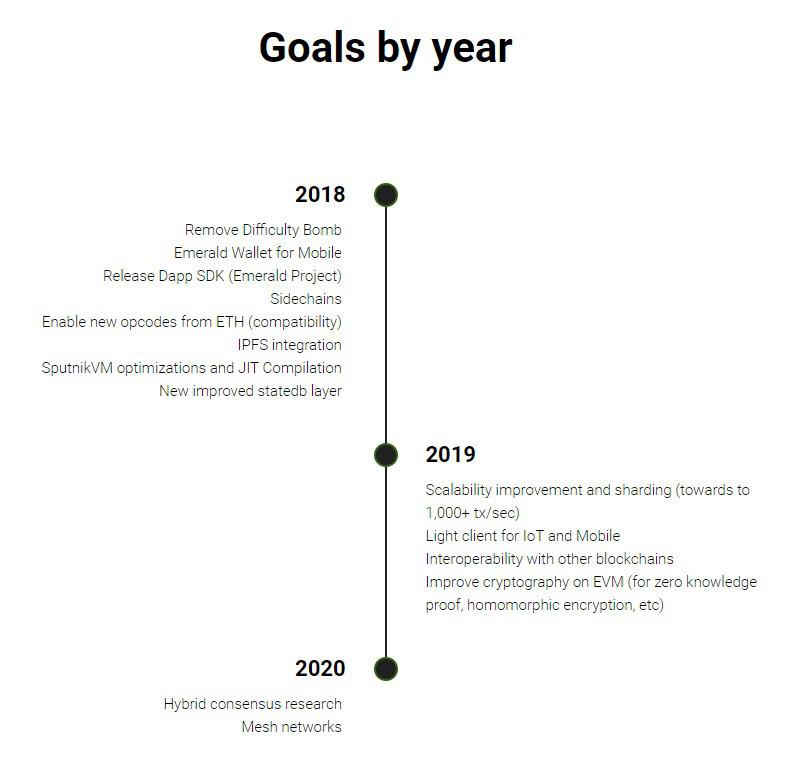
Ethereum Classic has published a detailed development roadmap on their website. In the short term, it includes goals such as ensuring scalability through sidechains, developing IoT and machine-to-machine protocols, and supporting third-party developers in building apps based on Ethereum Classic. In the long term, the coin should ensure more security and encryption, interoperability with other blockchains and a decentralized web.
The development roadmap does not contain any specific dates, but rather a specific list of development goals. Some of those goals in 2018 include the completion of Emerald Wallet for Mobile, the release of sidechains, and Sputnik optimizations. In 2019, Ethereum Classic wants to focus on improving scalability, sharding and improving cryptography on the EVM for zero-knowledge proof.
Learn Crypto Trading, Yield Farms, Income strategies and more at CrytoAnswers
https://nov.link/cryptoanswers
Comments are closed.