


kyolschin
Marathon Digital (NASDAQ: MARA) reported net losses of $75 million for the most recently reported third quarter of fiscal 2022. This resulted in a sequential decrease in cash and cash equivalents to $55.3 million from $86.5 million in the prior period. The Las Vegas based bitcoin mining company needs the price of the cryptocurrency to rise quickly, otherwise it faces a sustained deterioration in its liquidity position. Gross profit also turned negative, reversing the positive trend established since the second quarter of fiscal 2021.
 Data from YCharts
The deteriorating profitability backdrop all came in the run-up to the FTX (FTT-USD) collapse, an event that some bears have argued will set the theoretical foundation for an extension of the crypto winter. It doesn’t look good for Marathon. Its long-term debt hit a record $781 million in the third quarter, cash burn from operations was the highest on record at $43.4 million, and perceptions of Bitcoin have taken a sudden and negative turn , with only 8% of Americans having a positive view of crypto.
The crypto winter is getting longer
why am i bearish I believe this crypto winter is different than the others. 2021 witnessed record institutional crypto adoption on an unprecedented scale. Tesla (TSLA) would buy $1.5 billion worth of Bitcoin and begin accepting the digital currency as a payment option for its products, over a dozen crypto firms would list on the NASDAQ and NYSE either through an IPO, reverse merger or SPAC and new cryptocurrencies and cryptocurrencies are emerging Blockchain-related companies would also drain $32.8 billion in VC funding in the pandemic year. This number would exceed the sum of all previous years combined.
Therefore, with the current dwindling adoption, the usefulness of Bitcoin and the broader crypto ecosystem beyond being a speculative store of value is once again being questioned. NFTs have all but faded into oblivion, the metaverse has become a meme and stalled, and crypto yield farming is facing headwinds due to rising counterparty risk. The big stride of adoption in 2021 helped propel bitcoin prices to record highs but has now turned into a failure. This will mean a much longer crypto winter. In fact, Coinbase (COIN) published a report in mid-November; The long winter is getting longer as the FTX collapse could extend the crypto winter to the end of 2023.
Marathon’s business model is straightforward. It uses special hardware called ASICs to solve extremely complicated math problems and verify transactions on the blockchain. The company is then rewarded with new Bitcoin for the energy-intensive effort.
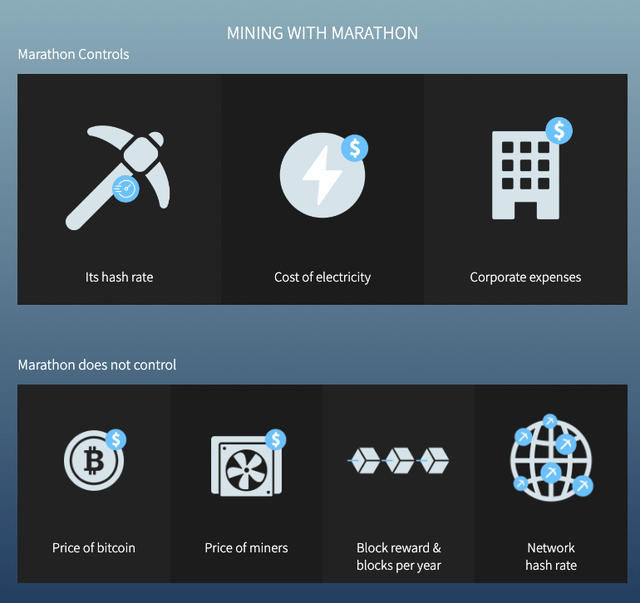
Marathon digital
Interestingly, although the company says it controls the price of electricity, Bitcoin production at its mining facility in King Mountain, Texas, was curtailed in November due to higher spot electricity prices. The company produced 472 bitcoin over the month, down 23% from October.
At the current bitcoin price of around $17,000, Marathon is not profitable. When the company last reported earnings for the third quarter of fiscal 2022, it reported revenue of $12.7 million, down 75.5% year over year and down $6.77 million from consensus estimates. dollar was missed. 616 bitcoin were mined during the quarter, a 51% decrease from the same period last year. The closure of a mining facility in Montana and an initial delay in commissioning the facility in Texas were the main reasons for this decline. Lower bitcoin prices, higher energy prices, and lower production all combined to result in a significant drop in profitability. Gross profit of minus $1.1 million was a decrease from gross profit of $45.8 million in the year-ago quarter, a change that resulted in a total free cash outflow of $137.6 million.
How can Marathon absorb the losses?
With $55.3 million in cash and equivalents, how can Marathon sustain the losses? Perception matters, and the failure of FTX, the collapse of the third-largest crypto exchange, is a major contributor to the dilemma Bitcoin faces in the year ahead. Basically, Bitcoin’s price is the main consideration for buying the commons, and it’s hard to imagine how institutional investors, other than those with the highest risk tolerance, will ever consider investing in the sector at the same levels as in 2021. FTX had a cap chart that included the Ontario Teachers’ Pension Plan, SoftBank and Sequoia Capital. The total losses and subsequent saving of face by these reputable financial institutions will likely present a scenario that other companies considering investing in more crypto ventures will need to avoid at all costs.
However, the bulls would be right in claiming that the situation is still evolving, and with bitcoin prices reacting extremely to the Fed’s dovishness, the digital commodity and its miners could stage a rally if inflation numbers come in below the new year’s expectations lie. Bitcoin is also here to stay.
 Data from YCharts
Marathon held 11,285 bitcoin at the end of October, which is worth about $190 million at today’s bitcoin prices. While this is a bulwark for the balance sheet, back-to-back operating cash burn over the next four quarters to Coinbase’s declared end of crypto winter could top $150 million. This would result in its current cash pile being depleted and Marathon likely having to start selling its bitcoin holdings physically to fund continued mining operations. In contrast, the stock price would enter a down cycle as the company relies on dilutive market offers to also fund operations. Dilution, cash burn, a heavy debt burden, and an extended crypto winter await the Marathon commons. Avoid.
Learn Crypto Trading, Yield Farms, Income strategies and more at CrytoAnswers
https://nov.link/cryptoanswers
Comments are closed.